Comparing dental exam types: Routine vs. focused examinations
Understanding dental exam types can make all the difference when you’re considering your next check-up at a clinic like Bright Dental. The landscape of dental care has several options—each designed to solve different concerns or provide targeted reassurance about your oral health. Making an informed choice not only lets you feel prepared but also ensures you get the attention your specific situation deserves.
For most people, the first option that comes to mind is the routine dental check-up. These visits are generally recommended every six months and include a comprehensive inspection of your teeth, gums, and mouth. However, types aren’t limited to routine check-ups. Sometimes, you might need a more focused exam to address a specific problem or concern. Knowing which type you need helps avoid unnecessary delays and anxiety.
For example, if you’re coming to Bright Dental in Budapest for a standard assessment, you’ll receive an overall evaluation to look for early signs of decay or gum disease. If, however, you suddenly experience tooth pain, a problem-focused exam is more appropriate. This type addresses an urgent issue and usually involves fewer steps, concentrating solely on diagnosing and treating the problem at hand.
When to choose comprehensive dental exam types — Comparing dental exam types
Comprehensive exams, a key branch of the many types, offer a complete picture of your oral health. These visits often occur at your initial appointment with a new dentist or when you haven’t had a check-up for a long period. They involve full-mouth X-rays, detailed gum assessment, oral cancer screening, and even discussion about your lifestyle and dental history. When you want to reset your dental care journey or haven’t seen a dentist in years, this is the gold standard for a baseline evaluation.
Periodic and specialized follow-up assessments — Comparing dental exam types
Periodic dental exams, which are a variation of standard check-ups, focus on monitoring ongoing oral health. Although similar to routine assessments, they’re often shorter and aim at people who are consistent with their dental care. Meanwhile, specialized check-ups—such as orthodontic reviews, implant evaluations, or screenings for those with systemic conditions—are tailored to particular groups or needs.
Focus keyphrase in practice: How to decide which dental exam types suit you? — Comparing dental exam types
Imagine a family in Budapest where each member has a different dental health status. The child needs a check-up ahead of starting school, the parent experiences gums bleeding, and the grandparent uses dental implants. The child would benefit from a preventive, age-appropriate routine exam, including fissure sealant or fluoride treatment if needed. The parent should opt for a focused periodontal exam, targeting gum health. The grandparent, on the other hand, will need a specialized implant assessment, ensuring the long-term success of their prosthetic.
Making your choice based on lifestyle and risk factors
Some patients wonder whether regular check-ups suffice or if their medical background suggests the need for more in-depth evaluations. For example, smokers, people with diabetes, and those with a family history of oral cancer should choose types that include more thorough screening and perhaps more frequent follow-up.
Meanwhile, for younger adults with excellent dental hygiene, maintaining a pattern of standard six-month visits may be enough. In contrast, patients with orthodontic braces may require targeted reviews to monitor tooth movement and ensure their appliances function correctly.
What to expect during different dental exam types
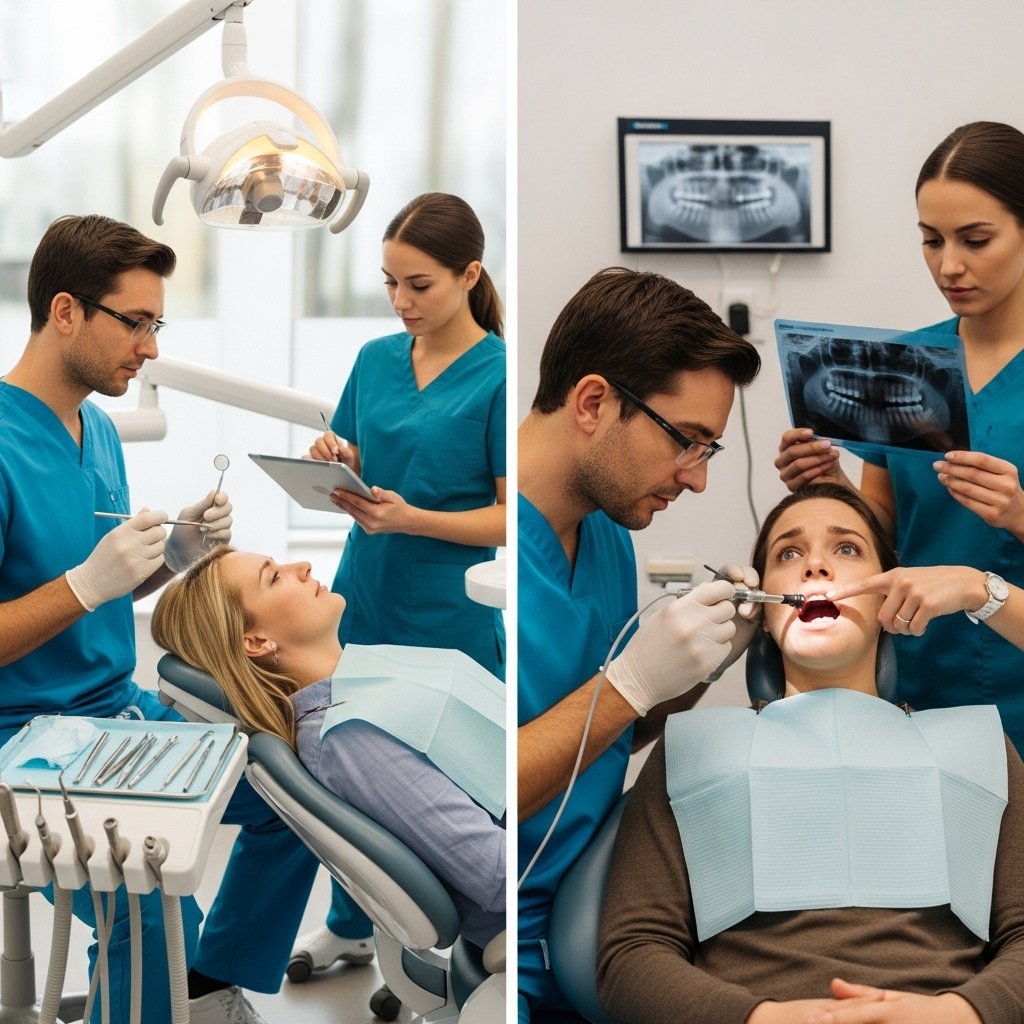
Routine check-ups at Bright Dental typically include cleaning, examination of teeth and soft tissues, and standard X-rays if due. Comprehensive exams will take longer, with the dentist reviewing both visible and hidden issues, often using panoramic X-rays and specialized measuring tools for gum pockets. Focused or problem-based visits may be shorter but are more concentrated on immediate relief or precise diagnosis, sometimes followed by a return for definitive treatment.
Pros and cons of each choice
Each type of dental exam comes with its own benefits and limitations. Routine exams are efficient for prevention and quick reassurance. Focused exams target urgent symptoms, providing prompt answers but may miss unrelated issues if not broadened. Comprehensive assessments cover all bases but require more time and preparation and aren’t necessary for everyone every visit. In deciding among types, balance your current needs, oral health background, and any changes you’ve noticed between appointments.
Resources for further learning
If you’re interested in learning more about the scope and recommendations for dental examinations, visit the American Dental Association’s information portal for clear, patient-focused guidance.
Summary: Choosing the right dental exam types brings peace of mind
Whatever stage you’re at with your dental health, knowing the differences between types lets you book appointments with purpose and confidence. The team at Bright Dental and clinics across Budapest are ready to tailor exams to your specific needs—whether that’s a quick reassurance, a full evaluation, or targeted care for implants or orthodontic treatment. By understanding your options and thinking about recent changes, your next dental visit will feel more productive and less stressful.